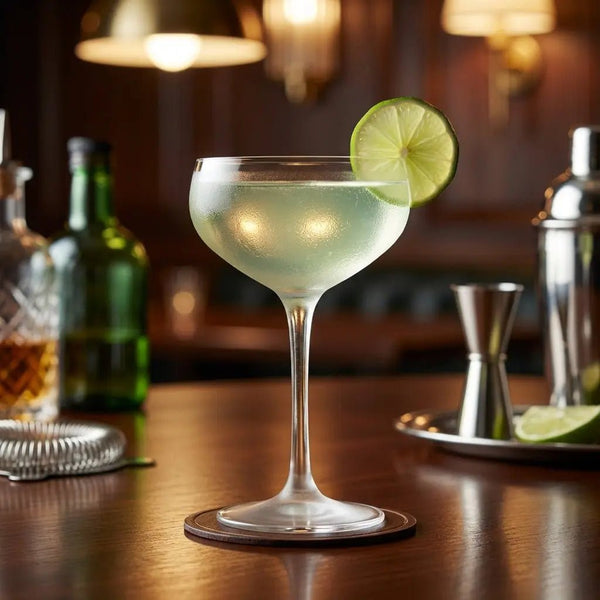


The Sidecar has a wonderful bit of mythology attached to it, invented, so the story goes, at the Ritz in Paris just after the First World War for a customer who arrived by motorcycle sidecar. True or not, it captures the drink perfectly, elegant, a little dashing, and built on cognac rather than the gins and whiskies that dominate most classic lists. It is one of the great sour-style cocktails, and one of the most underrated.
I reach for this one when I want something that feels properly grown-up. Here is how I build it, and the sugar rim debate that every Sidecar drinker eventually has to settle for themselves.
What Is a Sidecar?
A Sidecar is an elegant cognac cocktail made from cognac, orange liqueur and fresh lemon juice, shaken and served straight up, traditionally in a glass with a sugared rim. It follows the same classic sour template as a Margarita or a Daiquiri, a spirit, a sweet orange liqueur and a sharp citrus, but the cognac gives it a warmer, more refined character than either.
The cognac provides depth and a touch of oak, the orange liqueur, usually Cointreau or triple sec, rounds it out with sweetness, and the lemon keeps the whole thing bright rather than heavy. Balanced properly, it walks a very fine line between rich and crisp.
Ingredients
This makes one Sidecar. Use the card to scale it up for a round.
A Few Notes on the Ingredients
Cognac is what separates the Sidecar from every other classic sour, so choose one with a bit of character. A VS or VSOP cognac works well here, giving warmth and a little oak without being wasted in a shaken drink. Save your finest cognac for sipping neat.
Orange liqueur matters more than people expect. Cointreau is the standard choice and gives a clean, properly balanced orange note. Cheaper triple secs can taste thin and overly sweet, throwing off the whole balance.
Fresh lemon juice is what keeps the drink from feeling heavy. This is a sour at heart, so the citrus needs to be bright and properly fresh, never bottled.
The sugar rim is entirely optional and something of a personal choice. It adds a pleasant sweetness to the first sip, but plenty of purists prefer the drink without it, letting the balance of the shaken ingredients speak for itself. Try it both ways and decide for yourself.
Variations Worth Trying
- Brandy Crusta: an older, more elaborate ancestor of the Sidecar, served in a sugar-crusted glass with a long lemon spiral.
- White Lady: swap the cognac for gin for a cleaner, more botanical version of the same template.
- Between the Sheets: add a measure of white rum alongside the cognac for a stronger, more complex drink.
- Café Sidecar: add a small amount of coffee liqueur for a darker, richer twist.

Skip the Mixing
A Sidecar is one of the more elegant classics to make at home, and there is real pleasure in getting the balance of cognac, orange and lemon just right. It does mean keeping a decent cognac and a proper orange liqueur on the shelf though, which is more of a commitment than most evenings need. When you want that same polished, citrus-led feel with nothing to shake, our Pornstar Martini and the wider Boozy range are ready and waiting.
Sidecar FAQs
What alcohol is in a Sidecar?
Cognac and orange liqueur, usually Cointreau or triple sec, shaken with fresh lemon juice and served straight up.
Is a Sidecar sweet or sour?
It should be well balanced, with the orange liqueur's sweetness meeting the sharp lemon juice, and the cognac giving it warmth and depth in the middle.
Do you need a sugar rim on a Sidecar?
No, it is entirely optional. Some people love the extra sweetness on the first sip, while others prefer the cocktail without it. Both are correct.
What is the best cognac for a Sidecar?
A VS or VSOP cognac works well, giving warmth and character without wasting an especially fine bottle in a shaken drink.
Where did the Sidecar cocktail come from?
It is widely believed to have been created at the Ritz in Paris shortly after the First World War, though the exact origin story varies depending on who is telling it.