

Britain closed 1,839 licensed hospitality venues between the end of March and the end of June and opened 1,794 in the same three months, according to the Hospitality Market Monitor from CGA by NIQ and AlixPartners. The country finished June with 98,564 licensed outlets, effectively unchanged on March and 0.2 per cent below where it stood a year earlier.
A flat headline number is hiding an enormous amount of movement. The first quarter told a bleaker story, with a net loss of 305 sites and a total of 98,609 at the end of March, working out at roughly 3.4 net closures a day and a second consecutive quarterly fall. Bars took that quarter worse than most, dropping 1.2 per cent to 4,666 from 4,721 three months earlier.
The second quarter is where it gets more interesting, because the openings caught up. Britain had 4,695 bars at the end of June, and 515 of them had opened within the previous twelve months, with 191 launching in the second quarter alone. That means roughly one bar in nine trading in this country today is less than a year old. A sector in straightforward decline does not produce a number like that, and it is the sort of detail that gets lost when the quarterly figure is reported as a single net total.
The pressure behind the closures is not in dispute. Operators are carrying higher costs on labour, energy, food and drink all at once, and those costs are landing at the same time as consumers are more careful about what they spend on eating and drinking out. UKHospitality has spent this year warning about business rates in particular, describing the sector's cost burden as growing at an unsustainable rate.
Against that, churn and decline are genuinely different things, and it is worth being careful with the language. A venue closing because its lease ended and a better operator taking the site three months later shows up in the closure column exactly like a business going under. The estate is getting younger, which can mean renewal as easily as it means distress, and a quarter where openings almost match closures is not the same as a quarter where nothing opens.
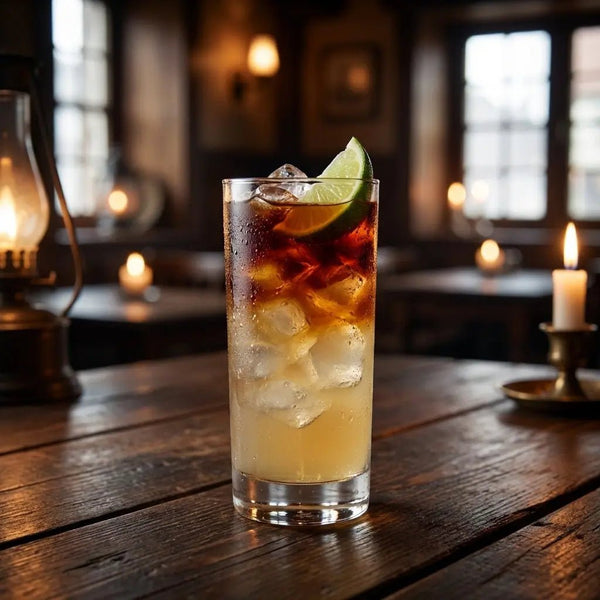
What it does mean is a lot of new drinks lists. Five hundred bars opening in a year is five hundred menus being written from scratch, and the serves that earn their place tend to be the ones people cannot easily build at home. A Long Island Iced Tea is the obvious example, because almost nobody keeps five spirits and a lemon in the house on the off chance.
David Baddeley, founder of Boozy, said: "Everyone reads the closure number and stops there. The number I look at is that one in nine British bars opened in the last year, because those are the sites writing a menu from nothing and asking what they actually want to pour. We supply into that trade and it does not feel like an industry giving up. It feels like one turning over very fast."
Boozy cans its cocktails in Greater Manchester and sells its Long Island Iced Tea as a fixed 200ml serve, with the full build, all five spirits and the cola top, published at its Long Island Iced Tea recipe.
Multi spirit drinks are also the ones people most often misjudge at home, which is what the Cocktail ABV Calculator is for. It covers more than 100 recipes and returns the finished strength and the unit count for each, so the arithmetic is done before the glass is, rather than after.
Boozy asks everyone to drink responsibly. Guidance on units, weekly limits and lower risk drinking is available at drinkaware.co.uk.