

Negroni Week runs from 21 to 27 September this year, and British interest in the drink has been climbing while most of the cocktail calendar has been flat. UK searches for the Negroni averaged 88,221 a month in June 2026, up almost 13 per cent on the 78,183 recorded in June 2025, according to search volume data from Ahrefs. Bars wanting to take part have until 18 September to register.
The more revealing number is how little the Negroni moves. Across the past two years it has sat between roughly 69,000 and 88,000 searches a month in Britain, with no summer peak and no autumn collapse. It was on 76,621 in July 2025 and 77,438 in September, then rose to 86,174 in October. Set that against the Aperol Spritz, which fell from 186,882 searches in July 2025 to 100,880 in September, and the Negroni starts to look less like a fashion and more like a fixture.
The festival itself was started in 2013 by Imbibe magazine and Campari, on a simple idea. Participating bars serve Negronis for a week and a donation goes to charity, with proceeds now going to Slow Food. It has grown into one of the largest coordinated events in the drinks calendar, running across thousands of venues worldwide, and this year it lands in a September that has no London Cocktail Week behind it, since that festival has moved to March 2027.
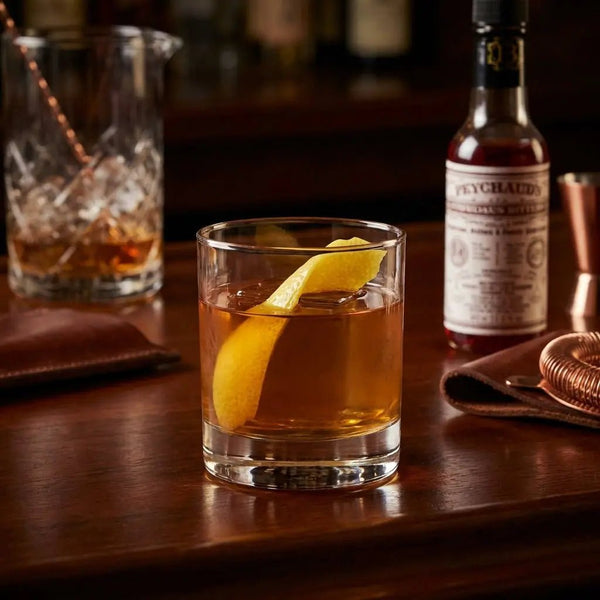
The drink is older and its story is contested. The version most often told puts it in Florence in 1919, when Count Camillo Negroni asked the bartender Fosco Scarselli at Caffè Casoni to stiffen his Americano by replacing the soda water with gin. Equal parts gin, sweet vermouth and Campari, stirred, served over ice with an orange peel. Drinks historians have since queried it, with some pointing to General Pascal Olivier de Negroni, a French officer, as the more likely namesake. The documentary evidence for either version is thinner than the confidence with which both are usually repeated, which is worth saying plainly.
What is not in doubt is how well the recipe travels. Three ingredients in equal measure, no citrus to go off, no shaking, no fresh anything. It is the easiest classic to make consistently and one of the hardest to make badly, which explains both its permanent place on bar menus and the flat line it draws through the search data while seasonal drinks rise and fall around it.
British bitterness tolerance has also shifted. Campari and its relatives were a niche taste here twenty years ago and the aperitivo hour was something you encountered on holiday. The spritz did the groundwork, introducing a generation to a bitter orange flavour in a diluted, approachable form, and the Negroni has been the beneficiary as palates moved on from it.
David Baddeley, founder of Boozy, said: "The Negroni is the drink that proves people will happily learn a taste rather than just be sold one. Nobody's first cocktail is a Negroni. Plenty of people's tenth is. That is a slower business than chasing whatever is trending in July, but the search numbers suggest it is a more durable one."
Boozy does not can a Negroni, but publishes the full stirred method, including the ratio and the orange peel, at its Negroni recipe for anyone making one at home during the week.
Equal parts drinks are also among the easiest to misjudge, because there is no mixer diluting them. The Cocktail ABV Calculator covers more than 100 recipes and returns the finished strength and unit count for each one, which for a stirred drink is a more useful number than the label on any single bottle.
Boozy asks everyone to drink responsibly. Guidance on units, weekly limits and lower risk drinking is available at drinkaware.co.uk.