

England recorded its driest July in 190 years of records last month, with just 5.6mm of rainfall, and more than half the country is officially in drought. Provisional Met Office figures show that total was 8 per cent of England's long term average for the month, and less than half the previous record of 13.4mm set in 1911. Wales, entirely in drought, was further adrift of its own history still, logging 7.9mm against a previous low of 22.6mm.
The heat arrived with it. Southern England saw mean temperatures 3.2°C above average and 1.5mm of rain across the whole month, roughly 2 per cent of normal. England is tracking its joint warmest July on record for mean temperature and the UK its fourth sunniest since 1910. "The headline story for July is undoubtedly the rainfall," said Met Office scientist Dr Emily Carlisle. "Across parts of England and Wales we've seen extraordinarily low totals, with some locations recording little or no meaningful rainfall for much of the month."
For anyone planning a drink in that weather, the health advice has not changed. The UK Health Security Agency, which issues Heat Health Alerts jointly with the Met Office, tells people to sip water through the day rather than waiting until they feel thirsty, and to limit tea, coffee and alcohol, all of which can worsen dehydration. Its practical suggestion is to alternate any alcoholic drink with a glass of water, or to choose an alcohol free option. That is not a new message, but a summer this dry gives it more weight.
Behind the guidance sits a market that has been moving in a similar direction for years. IWSR data shows drinkers in Britain bought three times as many premixed cocktails by volume in 2025 as they did in 2020, one of the few parts of the drinks trade in genuine growth while overall alcohol volumes fell. The same research house has tracked no and low alcohol products outperforming a shrinking UK market. The two trends are not in conflict. People are drinking less and buying more single serve formats, which is what you would expect if the priority is knowing what is in the glass.
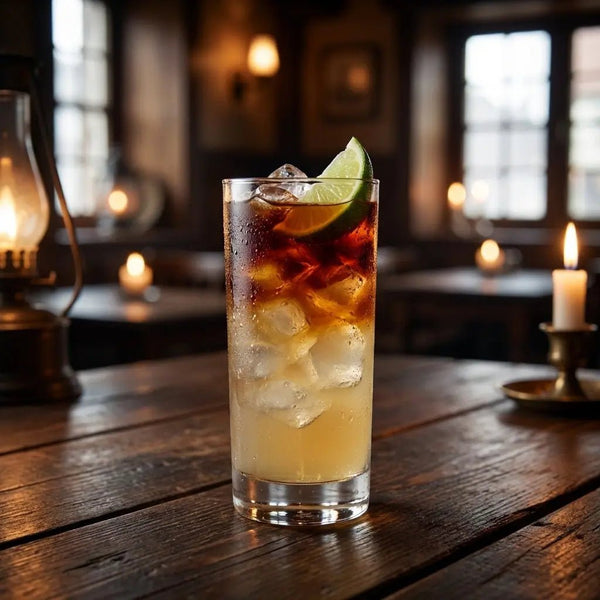
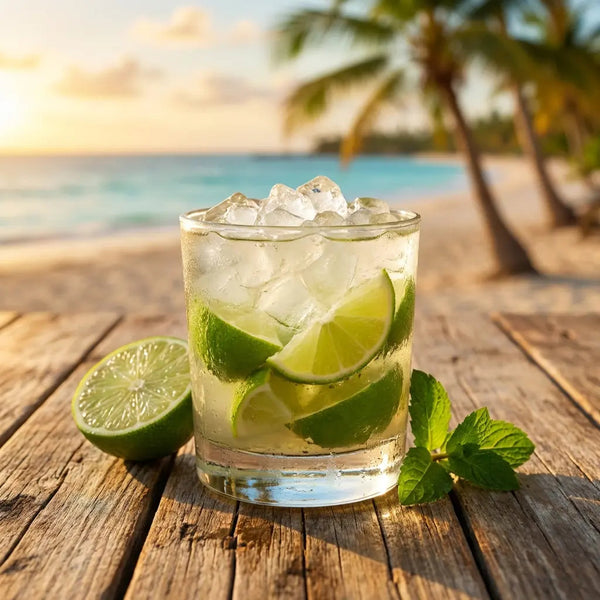
None of this is new to the drinks themselves. The long serve was invented for hot weather. The highball, the Collins and the Rickey took shape in the nineteenth century as ways of stretching a small measure of spirit across a tall glass of ice and soda, and the Victorians built them for the reason people reach for them now, which is that they are easier to pace. The spritz occupies that ground today, and the Aperol and Hugo versions have made lower strength, higher volume serves ordinary in British gardens. The Sex on the Beach, which Boozy sells as Peach On The Beach, came out of Florida in the 1980s on the same principle, a small measure of spirit across a tall glass of fruit juice and ice, and has comfortably outlived the decade that produced it.
"Every year we get asked what people should be drinking in a heatwave, and the honest answer is water first, then something long," said David Baddeley, founder of Boozy, the ready to drink cocktail maker based in Greater Manchester. "The drinks that work in this weather are the ones with a lot of ice and a small measure of spirit in them. That is why the Victorians invented the highball, and a large part of why we can everything in 200ml. A fixed portion is easier to keep track of than a free pour, particularly at 30 degrees."
Boozy's Peach On The Beach is mixed and canned in 200ml single serve portions at 8.4 per cent ABV, which works out at a shade under 1.7 units per can, and a step by step version for anyone making it from scratch sits on the recipe blog as the Peach On The Beach recipe. Anyone building their own long serve at home can check how strong it actually is with the free Cocktail ABV Calculator, which covers more than 100 recipes and returns the finished strength and unit count for each, dilution from ice included.
The rainfall and temperature figures come from the Met Office, which builds its monthly statistics from HadUK-Grid observations reaching back to 1836. The hot weather guidance comes from the UK Health Security Agency.
Whatever the forecast does next, please drink responsibly, with water alongside. For advice and information visit drinkaware.co.uk.