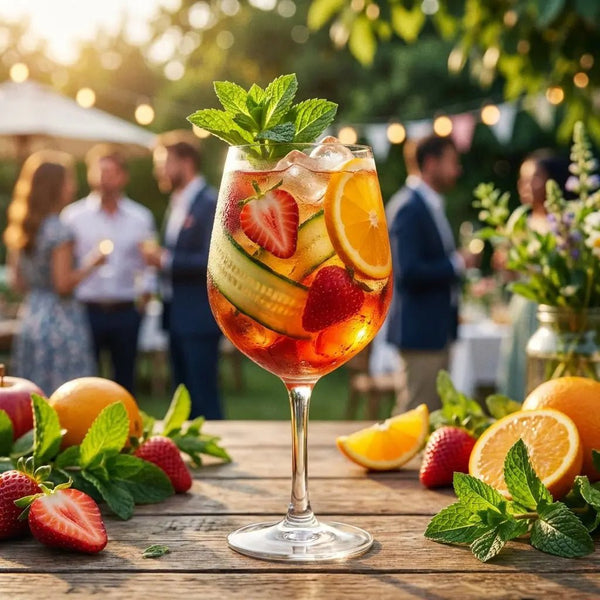


The Bellini was born in Venice, in Harry's Bar, sometime around 1948, and it has never really left. Giuseppe Cipriani created it, tinted the colour of a saint's robe in a Giovanni Bellini painting, and it became the drink of choice for a certain glamorous crowd passing through the city. It is barely a cocktail at all, just two ingredients, but the simplicity is exactly the point. Get good peaches and good prosecco and you can barely go wrong.
The one thing that separates a real Bellini from a lazy one is the peach, it should be proper white peach purée, not peach juice or syrup. Here is how I make one that tastes like an Italian summer.
What Is a Bellini?
A Bellini is a sparkling Italian cocktail made from white peach purée and prosecco, served chilled in a flute. It was invented at Harry's Bar in Venice in the late 1940s and named for its soft pink-peach colour, which reminded its creator of a Bellini painting. It is light, delicate and gently fruity, the sort of drink made for brunch, celebrations and warm afternoons.
There is nothing to hide behind with only two ingredients, so the quality of both really matters. When they are good, the result is fresh, elegant and effortlessly summery.
Ingredients
This makes one Bellini. Scale it with the card below for a brunch table.
A Few Notes on the Ingredients
White peach purée is the whole soul of the drink. The classic Bellini uses white peaches, which are more delicate and floral than yellow ones, and it should be a proper purée rather than peach juice or nectar. In peach season you can blend fresh ripe white peaches yourself, otherwise a good bottled white peach purée is the reliable choice.
Prosecco is the traditional fizz, and it is the right one. Harry's Bar used a dry sparkling wine, and prosecco keeps the drink light, soft and Italian. Champagne makes it feel more austere and, frankly, misses the point. Keep it well chilled.
That really is all there is to it, which is why the two ingredients have to be good. There is no sugar, no juice and no liqueur to rescue a Bellini made with poor peach or cheap harsh fizz.
Serve it cold and drink it fresh. A Bellini is at its best the moment it is made, while the bubbles are lively and the peach still bright.
Variations Worth Trying
- Rossini: swap the peach purée for fresh strawberry purée, the Bellini's red-fruited cousin.
- Puccini: use fresh mandarin or clementine juice in place of peach for a citrus version.
- Tintoretto: made with pomegranate for a deeper, tarter drink.
- Non-alcoholic Bellini: top the peach purée with a good sparkling elderflower or alcohol-free fizz.

Skip the Blending
Sourcing perfectly ripe white peaches and a bottle of prosecco for a couple of glasses is a lovely idea that rarely survives a busy week, which is exactly why I started Boozy. We make proper party cocktails, canned, chilled and ready to pour. When you want something soft, fruity and celebratory without the blender, our cocktail cans deliver, and if it is that peach note you love, our Peach on the Beach hits the same spot straight from the can.
Bellini FAQs
What is in a Bellini?
Just two things, white peach purée and prosecco, served cold in a flute. That simplicity is the whole charm, which is why both ingredients need to be good.
Is a Bellini the same as a Mimosa?
No. A Bellini is made with peach purée and prosecco, while a Mimosa is made with orange juice and champagne. They are both brunch sparklers but taste quite different.
Can I use peach juice instead of purée?
You can, but it will not be the same. Purée gives the fuller, softer peach flavour and the signature texture. Juice makes a thinner, less characterful drink.
What sparkling wine is best for a Bellini?
Prosecco is the classic and the correct choice. It keeps the drink light and soft in the Venetian style. A dry prosecco works best, since the peach already brings the sweetness.
Where does the Bellini come from?
It was invented at Harry's Bar in Venice in the late 1940s by Giuseppe Cipriani, who named it after the pinkish tone in a painting by the Renaissance artist Giovanni Bellini.